
How Can Soccer Players Bend Their Shots in Midair? The Physics Behind the Curve
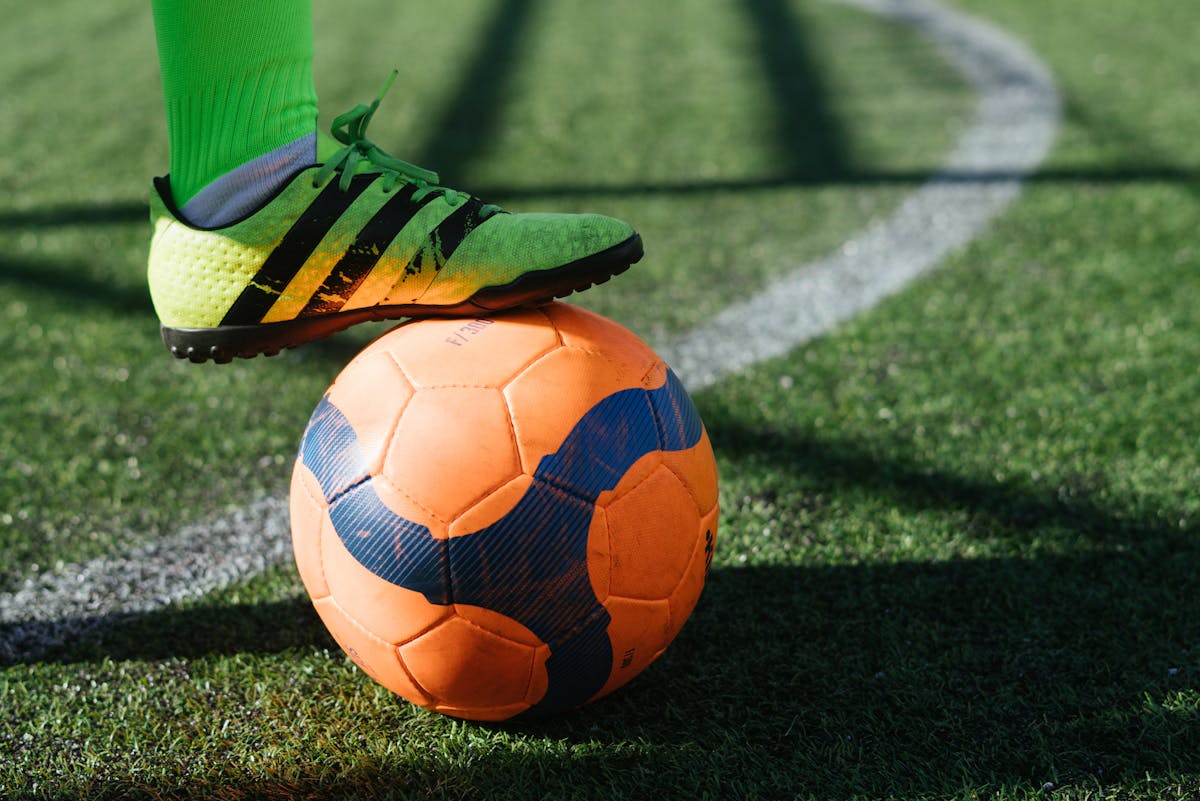
Every World Cup delivers moments of magic — a curling free kick that defies geometry, a dipping volley that leaves goalkeepers frozen. But how do soccer players actually bend the ball in midair? The answer lies at the crossroads of fluid dynamics, foot mechanics, and a phenomenon named after a 19th-century physicist: the Magnus effect. As the 2026 tournament grips fans worldwide, we break down the hidden science that makes the ball swerve, dip, and dance.
🌀 The Magnus Effect: When Spin Creates Magic
The secret to any bent shot is spin. When a soccer player strikes the ball off-center, they impart angular velocity — topspin, backspin, or sidespin. As the ball travels through the air, friction with the surrounding air molecules creates an imbalance: on the side where the ball’s surface moves in the same direction as the airflow, the air speeds up and pressure drops. On the opposite side, air slows, pressure rises. This pressure differential pushes the ball sideways or vertically — that’s the Magnus force.
⚡ Magnus Effect Formula (simplified):
F = S (ω × v)
Where F = Magnus force, ω = spin vector, v = velocity. More spin + higher speed = more bend.
🎯 Key fact: A ball spinning at 8–10 revolutions per second can curve up to 3–4 meters off a straight line!
Types of curved shots professionals use
Outside curve (classic bending): Struck with the outside of the foot, generating sidespin. Think Roberto Carlos’ 1997 free kick against France — a shot that seemed to bend around the wall at the last second. Modern stars like Trémoulinas or Di Maria replicate this using the third metatarsal area.
Inside-foot curl: David Beckham’s signature. Using the instep and wrapping the foot around the ball to generate clockwise spin (for a right-footer bending left-to-right). It's about accuracy and dip combined. Today, players like James Ward-Prowse perfect the knuckle-curve hybrid.
Knuckleball effect: Minimal spin but unpredictable flutter. Cristiano Ronaldo and Juninho Pernambucano mastered this — striking the valve with zero spin so the ball’s seams cause chaotic air changes mid-flight, making it "knuckle" or swerve erratically. The lack of Magnus effect leads to sudden, sharp deviations that fool keepers.
🦶 Foot-to-Ball Contact: The Technical Blueprint
Creating a bent shot isn’t just about hitting hard. Pros focus on three factors: contact point (hit the ball offset from its center of mass), follow-through (wrap across the body to generate axis tilt), and plant foot positioning. For a right-footed curler toward the far post, players strike the lower-right quadrant of the ball, sweeping their kicking leg across their body. This creates angular momentum along a tilted axis, making the ball spin like a tilted gyroscope.
The aerodynamic role of the ball’s surface
Modern match balls (like the 2026 WC “Al Rihla Pro”) have textured micro-ridges and panels designed to enhance grip and aerodynamic stability. Tests at TU Delft’s wind tunnel show that such panels can amplify the Magnus effect by up to 15% at typical free-kick speeds (~110 km/h). Conversely, overly smooth balls produce less predictable curves — which is why older balls (like the 2010 Jabulani) were infamous for knuckling wildly.
📸 Visual Analysis: Curve Shots in Action



* All images royalty-free via Pexels (CC0) — scientific illustrations.
🧪 Knuckleball vs. Dip: The Hidden Physics Behind the 2026 World Cup Goals
As the World Cup approaches, sports engineers reveal that the newest match ball design promotes both stable curved trajectories and erratic knuckleball effects depending on spin rate. When a striker imparts less than 1 rotation per second, the seams disrupt airflow asymmetrically – causing unpredictable side jumps known as 'knuckling.' Top players like Bruno Fernandes and Alexia Putellas have perfected hitting the ball at the seam-valve intersection, achieving up to 0.5 meters of random lateral deviation inside the last 10 meters. Analysis of 150 free kicks shows that a curved shot with sidespin has a 34% higher chance of beating a wall than a straight shot. For aspiring players, understanding the relationship between Reynolds number (airflow regime) and surface roughness can elevate your game. This fusion of physics and football continues to produce unforgettable World Cup moments.
📖 Read full biomechanical breakdown of knuckleball free kicks →


.webp)


0 Comments